Wednesday, 26 August 2015
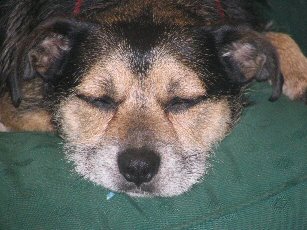
STOP focusing on the behaviour... think about the DOG...
I feel compelled to write this down as I have today seen several examples of what I am about to discuss, via the life-invading ever present Facebook of course.
So yeah, STOP focusing on behaviour - dog owners, pet parents, dog minders.. whoever you are.
Look away from that unwanted behaviour for a second, we aren't going to forget it entirely, no, but the first, most important, crucial element here is NOT that turd on the floor, its NOT that irritating barking, it is NOT that chasing of livestock or escaping the fence or humping Nanna's leg...
Its also not the expensive of the carpet cleaner, its not the irritation of your neighbours and its even not the scratches down Nanna's leg.
The FIRST thing you should consider here, is the dog.
Thats right, that goofy furry guy down there, him, or her of course - THATS your first consideration, THATS your priority (yes it is, I don't care if you have kids, elderly rellies, if the second coming of Christ is your godson.. the DOG is the priority right now)...
Look at the dog.
The dog is performing these behaviours, these behaviours did not manifest themselves alone, without the presence of a dog (if you have turds on your carpet and you have NO DOG then you HAVE got some serious issues that I am not qualified to deal with, move along please!)
Are you looking at the dog yet?
That furry dude has needs - he has inherited behavioural traits and desires, he has instincts. He also has some cognitive ability and he has emotions that are not dissimilar to your own.
He feels stressed, he feels relief, he feels hunger, thirst, pain and discomfort. He feels fear and anxiety as well as joy, he feels rage and he feels desire. Your dog can panic, and he can lust...
So whilst he won't have all the same reasonings for those emotions as we would, because he can't understand the concept of an over due mortgage payment causing panic, and he can't equate a bonus in a paypacket with joy, the basic, simple emotions are the same.
Ask yourself then, WHY did this emotional furry dude DO the behaviour you don't like?
He's not complex enough for the reason to be 'because he hates you' or 'because he wants to pay you back for leaving him home alone' or 'because he wants to take over the world' so you can rule those ideas RIGHT out, straight away.
If you focus on the DOG, and you ask why something happened, and how can we CHANGE things so that something doesnt happen any more... we can address most problems really pretty easily.
Why did the dog shit on the floor?
Because he needed to shit urgently? Because he didn't know where he should shit? Because he's scared to shit in the place you want him to shit? Because he got a sudden fright and effectively, shit himself? Because he couldn't GET to where he would have preferred to shit? Because you have inadvertently taught him to shit on the floor?
Loads of potential reasons there, you know not one of them is because 'he is a dirty bastard and wants to make you suffer'...
So how might we address this whilst thinking about the DOG rather than the behaviour as the priority.
Well when the DOG is the priority, that has to rule out all the methods that might be harmful to the dog - so lets take a guess that rubbing his face in this shit won't be an option, and probably shouting at him when you find the shit isn't an option. Those methods don't put the dogs needs as a priority, they put YOUR needs to feel like you are righting a wrong, in first place.
Here's a big newsflash - a dog has ABSOLUTELY, ZERO NEED to know he did something that you consider 'wrong'.
He does not need this, he will never need this and, you will never teach him this, in a million years. He is not capable of learning 'wrong' from you.
For sure he can learn ' this person is sometimes angry and scary' and he can learn 'never do THAT thing in the sight of THIS person'... but he has not learned that this action is 'wrong'.
Learning that certain actions are inherently wrong is a HUMAN thing, its a social construct and it changes from country to country and culture to culture. I can't really be bothered to list them but its safe to say there are things you can do in the UK that would be RUDE in Latvia, things you might find are considered polite in the USA but are shockingly, unspeakably wrong in China.
So stop wasting your time and confusing your dog, hes never going to learn it and attempting to teach it will frustrate you, and damage your relationship with your dog.
So, theres absolutely no need to try and impart the idea or knowledge to your dog, that he has done something humans consider to be wrong or bad.
What do you do then - well back to putting the DOG first, before the behaviour.
Your dog shit on the floor, did you teach him to shit outside?
Its a lot easier to teach a dog, and build a habit, that 'we always shit outside on this grass' and you do that by preventing any other option, and pairing the correct action with a high value reward.
We do this with children, its not hard - star charts and sweeties for sitting on the potty and making doodoo, nappies off and dust sheets down and a potty in every room to avoid the unwanted behaviour of 'shitting in our pants'.
We do not potty train children by just taking off the nappy and letting them run around and GUESS where the toilet is, and then when they make a mistake, rub their noses in it or drag them to it, point and shout BAD BOY...
If you did potty train a child like that, I am calling Child Protection/Social Services...
What if you taught your dog the wrong place to toilet, lets say you accidentally taught him to go on soft padded surfaces, ie, puppy pads.. and NOW you realise those pads are SO similar to carpet. oops your dog thinks thats the right place to go.
Same deal, prevent the error, provide the correct place to go, reward the correct action. Not hard, just requires some management and vigilance on your part.
We are now thinking about the DOG here - what does the dog know, what does he understand, what mistake has occurred and wrong thing learned, what will motivate him to repeat the action we DO want.
So way back near the start of this rant I said the dog takes priority over everything when you are solving a behaviour problem, the DOG is more important than Nanna's scratched legs or the ruined carpet.
I stand by that - you will not fix a behaviour problem by freaking out about Nanna's legs - yes that shouldn't occur, but no it does not justify an aversive methodology.
If we prioritise the dog, if we focus on MANAGING the dog so it can't happen, and in understanding WHY it happened, what motivated the dog, what produced that behaviour, we can address the behaviour in the right way and stop it happening again... which in the end is GREAT for Nanna, surely!
Trainers - this is why owners do things that are aversive and are, with the benefit of greater knowledge, horrible.
It is almost always NOT because the owner WANTS to be horrid to their dog, it is because in focusing on the awfulness or scaryness or expense of the unwanted behaviour, they FORGET the dog in the equation.
And that is very easy to do, when you have Nanna bleeding in the hallway and you have shit on the expensive new rug or you have neighbours threatening to call the authorities becuse your dog barks.. its SO easy to forget the dog and focus only on the behaviour.
Be sympathetic, YOU may know why the methods chosen are abhorrent to you but the owner is JUST trying to solve the problem and has prioritised the wrong thing.

Monday, 25 May 2015
Dogs and Kids - it's just a cute pic/video, right?
I am prompted to write this as a response to all the parents who also own dogs, particularly those posting pictures and videos on Facebook and on Youtube, of their dogs and their kids being 'cute' together.
Here's a statistic for you - 77% of children bitten by dogs, will be bitten by a dog who is a family dog, or a dog belonging to close friends/relatives - in other words, your child is MORE likely to be bitten by a dog you and they are familiar with.
Why is that?
Well when we live with a dog or we are really familiar with a dog, we forget they are a dog, we relax, we want to see the cute stuff, and we let slip from our minds that our dog, even the smallest of them, is a thinking, feeling individual who has a language our children don't understand and most of us are just guessing at.
Check out these two previous blogs on the subject:
http://ems-dogsense.blogspot.co.uk/2013/07/i-dont-care-how-damn-cute-it-is-kids.html
and
http://ems-dogsense.blogspot.co.uk/2007/11/your-dog-is-speaking-to-you.html
In the first blog, the little boy Blake was raised to think it was acceptable to 'pop on the nose' a dog that approached him, he was raised to feel completely confident about approaching dogs with food, approaching dogs who were eating, and to hit dogs...
He was ALLOWED to sit on dogs, hit them, ride them like ponies - are we SURPRISED he ended up being bitten?
In the second blog really watch that video clip - if you do nothing else, watch the clip and see if YOU can pinpoint WHEN that lovely labrador says 'I don't want to play with this baby'... its actually a long long time before he takes any further action and in my opinion he looks to his owner for help several times before he gets any and she NEVER really realises how uncomfortable he actually is about the babies behaviour.
Dogs and kids can have an awesome time, but those two blogs show you how things go wrong and how subtle dog body language is at first, when our dogs are talking to us, before they start shouting!
So, whats safe and whats not safe?
Don't - allow your child to sit on, hit, pull, kick, stand on, your dog.
Don't - allow your child to get in the dogs bed when he is in it.
Don't - allow your child to approach a dog who is eating a chew toy, bone or his meal.
Don't - allow your child to get in a dogs face, put their arms around his neck, or put their face in his face.
Don't - allow your child to tell off or discipline or correct your dog.
Do - encourage your child to respect your dog and understand he has feeling and emotions too.
Do - encourage your child to think about your dogs needs and desires - teach them to play with the dog in ta way the dog likes, such as throwing a ball.
Do - encourage your child to invite the dog to them for fuss and attention, and to respect if the dog does not wish to come over.
Do - involve your child (age appropriately) with care such as grooming and training and in measuring out or preparing food.
Do - encourage your child to come to you and tell you about the dog if the dog has something, even if that item belongs to the child.
For parents - never leave your child unsupervised with a dog, never expect your dog to tolerate unpleasant or unfair handling by a child, NEVER EVER punish your dog for walking away, or for warning that a childs behaviour is making them feel uncomfortable.
IF your dog is warning by freezing, lip curling, growling or air snapping at your child or at you, call in a professional, prevent the situation getting worse by safely managing the dog and child, DO NOT PUNISH THE BEHAVIOUR, AVOID IT HAPPENING IN THE FIRST PLACE, until the professional can get there.
Thursday, 23 April 2015
Labels - does it really do what it say's on the tin?
Under the surface of the dog training industry, across the world really, there is a bubbling, seething discord going on.
The labels we use to define our selves, or that others use to define us... are causing some problems!
Why do we need labels - well.. some would say we don't need them, and I think that would be a lovely place to live indeed.
If the simple term 'dog trainer' (ooh... is that a label)... in fact meant, automatically and without any further explanation:
"Person who teaches you to train your dog in the most effective and least harmful way possible"...
Well if it meant that I wouldn't be writing this blog!
To date there are the following labels I have come across - some I identify with, some I don't..
Behaviourist, behaviour consultant, force free trainer, positive reinforcement trainer, purely positive trainer, dog trainer, balanced trainer, progressive reinforcement trainer, positive correction trainer......
The list probably goes on and on and on.
Why do all these terms exist? Well, all these people are trying to make it clear what they do, or in some cases, don't do, in terms of training or behaviour work, with dogs.
They are not trying to convey this to other trainers though, they are trying to convey this to the general, non-dog-geek public, who may hire them.
So it seems pretty sensible to me, to try and find a term that sums up what you do, quickly and in a way thats easily accessible and understood by the public.
But thats not really what is happening.
Starting with the ones I actually identify with...
Positive reinforcement trainer - this is a person who uses positive reinforcement, though you may not know what that is, it sounds ok. It doesn't tell you what else they use or what they don't use.
Force free trainer - this is a person who does not use force to train your dog. It doesn't tell you what they do do though and what do you classify as 'force' exactly, are you aware of how force is commonly used in training as if you are not, this may not be particularly appealing or relevant to you.
Purely positive - as far as I am aware this is someone who claims only to use positive reinforcement, HOWEVER I have in fact never come across one of these people who actually exists as a working trainer. I have come across idealistic people who think this is what they do with their own dogs, and far more commonly I have come across these as theoretical people who appear to exist only in the minds of those who want to justify something or things THEY do that are perhaps not so nice...
This is a really misleading term as a ;purely positive' trainer in terms of learning theory quadrants, would therefore potentially use positive punishment too... and thats not what those who claim they exist, claim they do... so I am going to discount this one as I don't think they are actually real!
Progressive reinforcement trainer - these do exist, but do you know what that actually means? I like and admire the person who came up with this term and she is a really excellent trainer but honestly, I struggle to quantify what that means too so I don't expect anyone else to get it.
Balanced trainer - now that sounds nice? We all need a bit of balance in our lives, but a balanced trainer is in fact someone who uses positive punishments AND positive rewards... so they might use a choke or a prong collar on your dog and hurt him or cause fear, but they will also give him some treats if he does something good too... sounds ok but its not actually how the science works. But I digress!
Behaviour consultant/behaviourist - now this SHOULD mean someone who is focusing on your dogs behaviour and how to alter it, which may or may not involve some training, they should know HOW your dog thinks and solves problems and reacts emotionally, and how to change that, and how to manage things safely... but in the UK at least, anyone can call themselves this (and in fact any of the above terms) and you have little way of knowing if their knowledge of dog behaviour came out of a cracker, or was verified by an accredited and up to date professional body.
So... thats where we are, there are all these people and they will all tell you they can train your dog, or teach you to train your dog....
But how do YOU know they are going to do it in a way thats kind, effective, SAFE... despite all these labels, you still don't really know!
I happen to like 'force free' - as a generic cover for what I do.. yeah, most people get that 'force' isnt very nice, so doing something without force is probably better.
It is not perfect though and I will be the first to admit that.
So to begin with, 'Force Free' tells you that I do not use force when I am training or modifying behaviour.
Note this when I am training or as part of a behaviour modification plan'.... because there are times when I am working with my dogs, your dogs, whoevers dogs, when I may have to do something that is NOT a part of the training plan, that is not a training or behaviour modification technique, its a safety technique, its a 'don't be bitten, run over or dead' technique.
So whilst I am a force free trainer... hell YES I will pull a dog out of the road by whatever appendage I can grab applying whatever force is necessary to stop that dog being a flat-dog.
Of COURSE I will grab a dog in a dog fight by his tail and his scruff and hoik him out of it using plenty of force.
But pulling a dog out of a road or out of a fight are not training, they are not part of behaviour modification plans, I will not tell you to fix your dogs behaviour or train him a new behaviour, by doing those things (or many others)... those are not training situations, those are emergencies.
You may think it is silly to have to spell that out, but there are some folk, and categorically, these are without exception, people who are proponents of training methods and behaviour modification methods that DO use force, who like to stir the pot, and throw in ridiculous scenarios and suggest that we cannot be force free trainers, and that the ideology of force free training is impossible and we are all kidding ourselves OR of course, that we WOULD stand by and watch a dog get itself killed because we can't use force.
Stop being dickheads people, seriously!
Force free training is about far more though than just 'not using force' - its about opening your bloody mind and seeing a way round a problem using your brain, rather than your brawn.
I am, as a force free trainer, highly unlikely to have to do either of the things I set out above, because part of force free training means I wouldn't BE working that car chasing dog so close to traffic before he was ready, so the chances of an accident are much reduced.
I would not BE working that dog aggressive dog so close to other dogs that the opportunity to have a fight would not occur, so I would not have to use force to split up a fight that won't happen!
I have thought outside the box, I have used the massive brain I have evolved, and figured out a way to fix the problems without just hitting things with sticks until they do my bidding or bite my arm off!
A trainer who really, should be top of his game, and very clearly has a serious chip on his shoulder, recently posted that we have to make dogs do things that they won't like from time to time and by that reasoning, he posits that we MUST therefore, force them.
And if you follow his logic, we must all use force and there are no force free trainers...
He suggests that we force a dog to wear a collar and lead - actually I pair the sight, feel, sounds and sensation of being restrained with high value food rewards, working gradually always remaining below the dogs threshold so the dog WANTS to wear the collar, wear the lead, follow me around, so he feels a tug on his lead adn thinks YAY that means goodies!
No force there, a shit load of clever human brain manipulating the less clever canine brain, YES of course... but no force.
He suggests that we force a dog to follow us - he might, I don't - I teach my dog that following me is really fun to do, from such a young age that not following me has really not occurred to him. With older dogs I manage their environments so its not an issue, until they learn to want to be with me - so we drive to secure places where they don't need to be on a lead, and we teach, again, below threshold and build a bond so they do want to be with me and it becomes a non-issue. No force there then either.
He says that because we have to take our dogs to the vets or have them ride in the car, we must therefore use force to achieve this but again as the examples above... no, we don't - we can take the time to set our dogs up to want to do what we need to do in almost every situation.
The one time we cant is the emergencies life throws at us, and for sure, we will sometimes need to do something a dog won't like then.
But what Mr Force-Is-Necessary fails to realise, is when we GIVE dogs choice where possible, when we set them up so that they make the right choices and they enjoy doing so...
We also build in a HUGE degree of tolerance for the times we have to take total control and say 'nope, sorry this has to happen' - we don't damage the relationship.
And of course, we are still a force free trainer even if we have had to carry a screaming dog with a broken leg into a car and take him to the vets and hold him down on the table, because when did you last pick up a dog in an emergency and think AH, THIS IS A TRAINING SITUATION RIGHT HERE...
So maybe our labels are not good enough, maybe we need better ones, maybe it would be fucking peachy as anything to live in a world where we don't need any labels at all... I would like that.
But as long as there are people who think that because in rare, non training situation emergencies, we HAVE to use force, it is okay to use force whenever, wherever, as part of a training protocol, then I will feel the very REAL need to find a label for myself that distances me from them.
I do not want people to think 'dog trainer = forces dogs to do things they don't want to do'.
Monday, 17 November 2014
A Blog for the Anonymous Commenter/s (hi there, I see you there)
So someone recently left some comments on a fairly old entry, I don't know if they read much of this blog or just that entry but hey ho, I'd like to address some of their criticisms, cos thats what I do.
First of all, any entry by me that is entitled a 'a review of' and then a TV show or book - that will be my opinion of the TV show or book. It will therefore be biased to some extent, because my opinion may well not be the same as your opinion.
For reviews of Cesar Milan shows, yes I am tearing it down,yes I am biased, yes that is clearly evident if you read the rest of this blog (I have helpfully tagged Cesar Milan in entries about him so they are easier for you to find).
In posts that are not reviews I do discuss not just what is wrong with what he does, but why it is wrong, and what the correct approach would be. I don't think there is the room for that within reviews, particularly as those reviews tend to be aimed at like minded trainers/behaviourists who didn't really want to watch the show itself.
But anyway - so back to the comments.
"keep sayin shit about "good behaviorists" but never cite any studies"
"
why don't you give us some empirical evidence for your bullfuckery instead of forcing us to take your word for it"
Frankly... you do not seem to be any professionnal either. Just a random amateur like me"
How about reading/watching the following:
Raymond & Lorna Coppinger - Mexico City Dump Dogs, also Raymond Coppingers observations of the dogs of Pemba.
These guys reveal that dogs are not pack animals!
Dr P. McConnell has a wealth of information in her books and online. http://www.patriciamcconnell.com/dominance-theories
Here particularly she discusses the 'dominance myth' - dogs do not seek to dominate us, and if we seek to dominate them, we just cause problems.
Also on that topic I'd recommend John Bradshaw's 'In Defence of Dogs' and the somewhat briefer work 'Dominance, Fact or Fiction' by Barry Eaton.
If you want some long term, tried and tested, been doing it for decades kinda stuff, check out http://www.sfgate.com/magazine/article/The-Anti-Cesar-Millan-Ian-Dunbar-s-been-2550043.php
Dr Ian Dunbar has been teaching and training with positive reinforcement for over 35 years, he is also a vet and a behaviourist (with the PhD's to prove it).
If you are still in doubt that punishment based training is damaging to dogs and their relationship with humans, what about this article by Stanley Coren
http://www.psychologytoday.com/blog/canine-corner/201205/is-punishment-effective-way-change-the-behavior-dogs
If you haven't the desire to read through that, the relevant study is by Meghan Herron, School of Veterinary Medicine at the University of Pennsylvania. I recommend you do though, this isn't an article by just anyone, Stanley Coren is a well respected scientist and pscyhologist who has written a lot of books on dogs, the way they think and how we relate to them etc.
Anyway, this study backs up the findings in human and child psychology, that the use of punishment particularly (but not limited to) physical punishment, increases the likelyhood of aggressive behaviour.
And before you say 'ah but that doesn't say that positive reinforcement is better'.. well here, have an other from Psychology Today..
http://www.psychologytoday.com/blog/family-affair/200809/rewards-are-better-punishment-here-s-why
Ok so, this article references a study done on children, but children and dogs are a very good comparison, particularly young children. Also, there are not nearly so many studies done on dogs, purely because up until relatively recently, no one saw much value in financing such studies.
That is now changing and thats great news - which leads me on to tell you about SPARCS - Society for the Promotion of Applied Research in Canine Science - http://caninescience.info/
SPARCS have, at the time of writing this, now run two conferences, both spanning three days, with seminars/lectures by the likes of Coppinger, Udell, Wynne, Gadbois, McConnell, Hecht, and many, many more.
These guys are pushing for more and more research to be done, to fill in the gaps that we have, but its worth pointing out, the gaps we have are generally NOT the areas most 'average joe's are discussing - the old 'is Cesar abusive and do his methods cause problems' type questions are old news, theres no doubt there, its not a mystery Yes they are, yes they do, end of.
These guys are researching how canids are using their olfactory senses, how wolves use agonistic and affiliative behaviours, why dogs relate to us so well when other canids do not...
Its interesting stuff and their yearly SPARCS conference can be viewed live and free via online streaming, so its very accessible!
There is quite a lot of useful and interesting information out there, but you do have to go and look for it, its really not going to jump up and bite you in the ass, and most of it is sadly nowhere near as exciting as watching someone on tv appear to work magic.
As for me, am I a professional - I guess that depends on your definition of professional!
I'd say I am, based on the fact that this is how I earn my living, that I blog on the subject of dogs and training in a number of other places, by invitation ( sporadically, for I am a lazy creature), that I spend a not inconsiderable amount of money each year on attending training courses, conferences/seminars and lectures, and I think quite crucially, that people seek me out for my assistance and advice.
Personally my definition of a professional, is someone who not only knows a lot about their subject matter, but is always learning, and knows when (and to whom) to refer a client on when they don't have the answer - because no one has all the answers.
Yours may be entirely different!
Tuesday, 11 November 2014
How NOT to deal with resource guarding!
As of a few minutes ago, I discovered that a friend who shared this video from Facebook, has been 'locked down' by Facebook and the video removed.
The original footage and copyright belong to Nat Geo and Cesar Millan (I presume) I make no claim to own this video.
I reproduce it here under the UK copyright legislation 'fair dealing - using the work of others' as specified here:
"Criticism or review
Quoting parts of a work for the purpose of criticism or review is permitted provided that:
- The work has been made available to the public.
- The source of the material is acknowledged.
- The material quoted must be accompanied by some actual discussion or assessment (to warrant the criticism or review classification).
- The amount of the material quoted is no more than is necessary for the purpose of the review."
In this video, Cesar is attempting to demonstrate and address Holly's food guarding and aggression.
It is important to note that a dog is aggressive over food when they fear they will lose that food. Food is a super valuable resource to your dog, to any dog, in fact to any living being, because without food, we'd die.
It is not remotely abnormal for a dog to want to keep its food to itself - however in a home situation its not appropriate to have a dog who is so fearful that food will be taken, that they feel they must defend it by being aggressive.
So the answer is to remove the FEAR - to change the dogs emotional response in the situations they currently interpret as 'you need to be on guard here, you might lose this resource', from fear to joy!
And it is super simple to do - you put down a bowl with just a few pieces of low value food in it, you step back as far as the dog needs you to so they feel comfortable (lets say a couple of metres at least) and once they have finished that food you step foward a foot or two, and you toss in some HIGH value food.
Whoa! Person approaching food bowl = GOOD THINGS!
This is really low risk, the food in the bowl was low value, the dog has finished eating it before the person approaches, and the person only steps a few feet closer and throws the high value food the rest of the way, so the chances of a dogs fear being triggered in this example are really really low!
Repeat this routine over the course of a few days and your dog will start to look up as he finishes his food, hoping the human will step nearer and hand over more yummies!
Once that happens you can put more food in the bowl initially or you can step a little closer to start with (but don't do both, we want to make this EASY).
Gradually we teach the dog that no one is going to take their food, that approaching humans bring MORE food and are a good thing.
Of course sometimes we do need to take something from a dog - but you know we NEVER need to take away a bowl of food WE gave the dog in the first place. How many times did you accidentally give your dog a bowl of poisoned dog food or a ticking bomb? Oh thats right, you've never done that, and you never will!
If you wanted to take your dogs food bowl to put more in there, just wait until he is done! If you gave him the wrong meal well thats unlikely to cause a problem and if you gave him a meal with someone elses medication in it, again its unlikely to do any harm as a one off, call your vet if you are worried.
The times we do need to take things from a dog, we can teach that skill in advance - its pretty much known as a 'retrieve' - just teach your dog that bringing you stuff he has and giving it to you is HIGHLY rewarding behaviour. Teaching a dog to swap is pretty easy, start out with low value things, hand them to him, then offer him a high value treat - he's going to drop that thing and yay, he gets his reward. Work your way up to higher value items, and treats he can't see immediately (so, hidden in your pocket, treats you have to get up and get for him) so that you fade out the 'bribery' element.
If your dog picks up something dangerous, there is never ever any way that chasing, confronting, or forcing him to give it back will make the situation safer.
If you chase or confront your dog, these are the likely outcomes:
- He runs away
- He tries to chew it harder
- He tries to swallow it
- He guards it from you and bites you
In no way are any of these options safer, no matter what item he has, than you walking AWAY from him and sneakily doing something you KNOW will attract his attention, such as picking up his lead and offering him a walk, getting the car keys and offering him a ride in the car, making a sandwich and eating it noisily - you know your dog, you know what floats his boat. Offer that and DO IT, do not lie, because you will only lie to him once!
This is what you do in an emergency situation, it is not how to train a dog to leave, drop or give things up, but it is important to know that there is no emergency worth you confronting your dog and teaching him to use aggression.
To cut a long story short - there is never any need to do what Cesar does in the video.
No behaviourist worth their salt needs to confront a dog as Cesar does, to the point where they get bitten. As a working behaviour consultant myself, frankly I wouldn't need to do any of the things in this video at all - if the owner tells me the dog is food aggressive then I will start with the cure straight away, I don't need to SEE the dog guarding food to know what the potential outcome might be, and none of what Cesar does in the video is involved in the cure.
Whats more, addressing the problem the way I do, means that if for some reason the owner was wrong and the dog is NOT food aggressive, well all we have done is waste some time, we will have done NO HARM.
Tuesday, 2 September 2014
Are You Still Hauling that Sled...
... Whilst Everyone Around You Is Using Wheels?
"I've been training this way for 40 years and it works"
"I've trained all breeds this way and never had a problem"
If we don't take a look around us, with a truly open mind, there's a damn good chance that we are still hauling that heavy load on a sled through the dirt, whilst all around us, other people are zooming by on their wheels.
There is no doubt that using old school methods that involve punishment and are based in the flawed concept of 'pack theory' can give results, they can appear to work.
But at what cost, at what risk, and even if you have by some lucky chance, gotten by without having a dog ever redirect onto a handler when subjected to a harsh correction, or develop a fear of a rattle bottle... what if there IS a better way.
What if all this time you've been doing it the hard way, the miserable way, the way that is not actually fun for all concerned.
Because it CAN be fun, in fact, it should be fun - we have dogs for our amusement, whether you get your kicks from competitive dog sports or just from housing a hairy freeloader who eats you out of house and home, we have them for fun!
The fabulous comedian Tim Minchin said this:
"
Be Hard On Your Opinions
A famous bon mot asserts that opinions are like arse-holes, in that everyone has one. There is great wisdom in this… but I would add that opinions differ significantly from arse-holes, in that yours should be constantly and thoroughly examined.
We must think critically, and not just about the ideas of others. Be hard on your beliefs. Take them out onto the verandah and beat them with a cricket bat. "
http://www.timminchin.com/2013/09/25/occasional-address/
He hits the nail on the head - if you, in your opinion, have been doing something for a long time, thinking a certain way for years - its important that you take those ideas, practices and beliefs and really examine them. Put yourself in someone elses shoes and look at those ideas from another angle.
Today I heard this:
" Never place yourself in littermate status, do not sleep with your pup..."
The persons point being that if you do this, your pup will treat you as an equal and therefore not respect you.
I can see how someone might think thats reasonable, but lets examine that further. To treat you as another puppy, a pup would have to be completely unable to tell one species from another.
And yet we know that dogs can tell the difference between a variety of species and not only that, they can learn to behave differently around them!
If this were not something dogs are capable of doing then how does this person explain the working lurcher who knows that the rat is prey, but the ferret is not, the rabbit is prey but the sheep is not....
Lets go one step further, what about the pup who has learned that the cat can be a cosy bed companion, but he cannot play with the cat as he would play with another dog. Or the Deerhound who plays with other dogs by leaping in the air and pouncing on them (and she can leap 6 foot!) but would not attempt to do this with a person (yes this is my dog, guess where she sleeps - yep, in my bed!)...
But what else is this person missing - by insisting you do not sleep with your dog (either in the bed or in the same room) she is insisting that you miss out on some of the very companionship you were looking for when you got a dog. For entirely fictional reasons...
She is also insisting that you subject your puppy to sleeping alone in another room before they are housetrained over night, and before they are confident in their new home - which sets this pup up for anxiety and distress from day one.
And all of this due to an opinion she has formed, without really examining it or thinking about it.
Further more, when you investigate this idea deeper, you find people who believe this are also believers of pack theory... and yet if you examine any social group of canines, where do the young sleep?
With the adults. In a big heap.
So the whole thing falls apart, because now we see that the pack theory doesn't actually make sense - if we were to do what packs of wolves do with their young, then we would all sleep in a pile somewhere, and we would let our puppies crawl over us at meal times, allowing them to snatch the choicest bits from our mouths - hell we would come home from a meal out and regurgitate that steak and chips for them...
Which demonstrates just how ridiculous this stuff really is!
I do understand that if something appears to work, and you have thought a certain way for a long time, it is hard to let go of certain beliefs and practices. That is the nature of humans really, and I am no different - there are things I have had to open up to, (clicker training was one a while back now, Ttouch is another!) and things I have had to let go of (boy how I struggled with the idea of teaching a recall ON lead!)..
So - next time you find yourself thinking 'but I've always done it this way' or 'but that works for me' - play devils advocate and see if you can find the holes in your opinion, see if you can find your blind spots and open up to learning something new.
It really won't hurt!
Wednesday, 18 June 2014
Time outs - how to have a useful and effective consequence

A correctly deployed and wisely used time-out is
a very very effective consequence for unwanted behaviour. It is a bit
of a grey area as to whether this is a positive punishment or a negative
reward, I actually don't think it matters, what matters is how you use
it, when you use it and why you use it.
What is it
A time out is when you remove the dog from the room, or yourself from the room, for between 5 and 15 seconds, to provide a clear cut consequence for unwanted behaviour. It needs to be done swiftly and without lots of chatter or recriminations or chasing the dog around, so that the dog can link the time out with his own behaviour.
Example
Fido is barking in the face of Fluffy. Fluffy has a toy Fido would like and he is bullying Fluffy by yelling at her, to give it up. Using my body rather than my hands and voice, I push Fido out of the room, shut the door, count to ten and let him back in.
I repeat this every single time Fido attempts to start bullying Fluffy again for the toy.
What happens...
Done correctly, Fido learns that his behaviour, bullying Fluffy for the toy, results in the opposite of what he wanted. He doesn't get the toy, in fact he gets NO attention whatsoever and his behaviour is interrupted and prevented from working. After a few repetitions, Fido realises this tactic will not work.
Is it really that simple?
Yes - and No.
On the one hand, the basic bones of it is really that simple, however this is positive dog training here - if we just give Fido a time out and we do not ask "Why is Fido bullying Fluffy? we are not thinking dog owners, we will just be using a punishment to eradicate a symptom.
A time out is a useful consequence as one element of a behaviour modification program - used alone, without addressing the underlying issues, without demonstrating to Fido appropriate ways of communicating, without considering Fidos actual needs, it will lead, just as other forms of punishment will, to the behaviour or related behaviour popping up elsewhere.
So lets go back to Fido and Fluffy - we need to know more about them!
Fido is a 8 month old terrier pup - Fluffy is a 2 year old Deerhound b itch. This means neither of them are mature adult animals. Fido has a huge amount of testosterone swirling around his body and these hormones are pushing him to test his boundaries and try out behaviours to see where they get him. Fluffy hasn't the confidence or maturity to do anything about him bullying her, an older b itch might make a face at him or air-snap, or just get up and walk away but Fluffy isn't old enough for that sort of wise behaviour yet.
We can't stop Fido being a juvenile male dog, and we can't magically make Fluffy become a wise, sensible lady - they are who they are. So what can we do?
Prevent
Dog's don't really do sharing all that well, it isn't natural, so ideally (not that any of us live in an ideal world), if we make sure that Fido and Fluffy are kept mentally as well as physically exercised, with lots of training, games, walks of suitable distances for their age. If we make sure there ARE plenty of toys to go around, and that we rotate these toys daily so a different selection is available each day, we occupy their minds by feeding from food dispensing toys and we manage their interactions so there is really no opportunity to compete or vie for the same resources, we can generally prevent such behaviour.
In other examples of unwanted behaviour there are other ways of preventing it - it is up to us to find those ways (and to deal with it when we make a mistake as we inevitably will), and to offer appropriate outlets for necessary behaviour. That means giving the dog who chews furniture and wallpaper access to lots of chewy toys and foods and limited access to furniture and wallpaper, giving the dog who is addicted to your smelly socks and underwear lots of opportunities to track scents on cue and no opportunities to get at our dirty laundry, etc etc!
Pre-empt
We can identify when the behaviour is likely to occur - ie, when Fido is bored, when he is antsy, when he is full of energy, when he doesn't have his own toy, and when Fluffy has something that looks interesting. Because we can do that, we can and we should step in first. The time to react is before Fido gets into a full on tantrum, bullying Fluffy. If you can spot him eyeballing Fluffy's toy, getting himself in a tizz, you can offer him another toy and a game with you that should be more rewarding. You could take him to another room and play with him there, you could do some clicker training with him or some impulse control games. There are a multitude of ways you could distract Fido before he starts to bully Fluffy.
So when do I use a time out
When you are sure that you are meeting your dogs physical and mental needs, and you are doing your best to pre-empt unwanted behaviour and distract your dog or 'change the subject' with him before he goes down the route of unwanted behaviour, then when you mess up, when you miss that chance to pre-empt, when despite your endeavors to meet your dogs needs, he does the unwanted thing anyway** then you time out.
**Lots of us will have dogs who have developed unwanted behaviours already, either through our own errors or the errors made by previous owners - then we take steps to do all three at the same time and we need to use the time outs.
The point I am making here is, time outs have to be used thoughtfully and carefully and in conjunction with pre-empting behaviours and taking steps to prevent them occurring in the first place. To use them otherwise is little better than waiting for your dog to mess up then pointlessly shouting No at it.
Common errors in using time outs
Asides from the obvious, using time outs without attempting to think about why the dog is behaving that way, how we can pre-empt and prevent that and provide appropriate outlets for the behaviour where relevant, these are the common mistakes:
1/ Putting the dog out of the room for several minutes or even longer.
It is tempting to think that a time out of 5 minutes to 30 minutes or more will be more effective than just 5 to 15 seconds. It really isn't.
When you time a dog out for 5 seconds, you provide a short, sharp, clear consequence that is easily linked by the dog, to the action/behaviour/thing he was doing and thinking about at the time the consequence occurred.
If you leave that dog shut out of the room for much more than this, they forget - they wander off, they start focussing on how they are shut out and alone and sad, they start barking or shredding carpet or they fall asleep. Whatever happens, they forget what happened and why it happened and the message is lost.
2/ Human inconsistency.
This is a biggy - a time out has to happen as soon as the behaviour starts (ie as soon as the dog thinks of doing it!) and it has to happen every time as well.
Humans being what they are, ie, sloppy, inconsistent creatures - we ignore it, we think oh I will get up in a minute, we are watching tv we are eating our meal, we are talking on the phone or having a natter with our partner. Whatever, but the more inconsistent we are, the worse the behaviour will become because once you are inconsistent you are telling the dog sometimes this behaviour can happen. If there is a 'sometimes' then the dog will ALWAYS try it. Just think about the sometimes and the maybes in your life - sometimes you will win at bingo. Sometimes that horse will come in. Sometimes the girl will say yes...
We bet on sometimes, we repeat behaviours that work 'sometimes'.
How often do you repeat a behaviour that works never?
3/ The Extinction Burst
Linked to the 'sometimes' issue - this is where a dog is juuuuuuust about to get the idea that this behaviour works never - just before that happens, they try harder! And very very frequently the human sees this and interprets it wrongly as the method not working, and gives up.
What is actually happening is not freaky or unusual, in fact its something we humans do all the time. If a thing always worked before, well its worth trying a little harder when it stops working.
The tv starts to blip, but it always worked before so in frustration, you hit it - bingo, it works. Now you hit it every time it blips, and one day that doesn't work. Do you give up and buy a new tv immediately?
No - you hit it twice!
Your car always starts, until one day it doesn't - you turn the key a few more times, it starts, so now you have learned to try three times instead of once. When it doesn't work on the third try.. do you immediately head over to the car sales place and buy a new one? Nope. You turn the key four times, five times...
Even really OBVIOUS things, we will try harder.
You come into the house and you flick the lightswitch - it doesn't come on - you flick it again. Now - even when you walk into the house, and there is no electrical noise, all the street lights outside are off, none of your neighbours have their lights on, ie, your entire environment tells you there is a power cut, there is no juice in the whole street.... you STILL flick the light switch don't you.
So, when your dog tries something that has always worked, and now it doesn't - he would be a total dummy to NOT try it again at least once or twice!
4/ Three strikes and you're out
This generally won't work and just makes the whole process longer and less effective. You have to prevent the behaviour working every single time, and because dogs cannot reason quite the same way as kids (and heck, small children don't reason anywhere NEAR as well as adults think they do either!) this is not a helpful strategy.
5/ Chasing the dog around, grabbing the dog, shouting at the dog
This again muddies up the message you are giving to your dog. Don't argue, wheres the point arguing with a dog. Don't yell or grab or hit, that just sends the message that YOU are scarypants and need to be avoided and it takes the dogs focus from whatever he was doing, to YOU and your behaviour.
Set yourself up so that either you remove the dog, or you remove yourselves, depending on what the problem is, with the least amount of fuss possible. This may mean instructing a visitor to step outside the room adn close the door over and over again, this may mean putting a harness and trailing house line on the dog. Whatever it takes, you have a huge human brain and you can think of ways around this problem!
6/ Giving up too soon!
Some dogs, for some behaviours will take five, ten, twenty five repetitions of the time out - you must be prepared to jump up and time out the dog every time, over and over and over and over. For long standing, ingrained behaviours it is hard work and you must be on the ball and you must not quit. Also be ready to reward heavily the first signs that your dog is getting it and actively choosing NOT to repeat that behaviour, you may only get a split second opportunity with some dogs!
The first time you start doing this it can be very hard work and very frustrating. If you have a dog with a really irritating and long standing issue, for example, barking AT you for long periods, you may find it better to actively set up a day to get started, a day where your meals will be portable, stand up type food, where no visitors will come, where the phone is off the hook. Do be reassured that after the first session it is rarely ever as bad again!
The other trick to use if you think your dog REALLY isn't getting it, is to 'change the subject' - ie, if you have done a million repetitions of the time out, and Doggo is still persisting and you don't know why and you fear you might lose your rag - instead of letting Doggo back into the room, YOU go out and you take him for a walk or you go in the yard and play, anything other than what was happening before. Go and chill out doing something else, something easy, and think the problem through and see if you cannot employ pre-empting or prevention to better effect in future.
What is it
A time out is when you remove the dog from the room, or yourself from the room, for between 5 and 15 seconds, to provide a clear cut consequence for unwanted behaviour. It needs to be done swiftly and without lots of chatter or recriminations or chasing the dog around, so that the dog can link the time out with his own behaviour.
Example
Fido is barking in the face of Fluffy. Fluffy has a toy Fido would like and he is bullying Fluffy by yelling at her, to give it up. Using my body rather than my hands and voice, I push Fido out of the room, shut the door, count to ten and let him back in.
I repeat this every single time Fido attempts to start bullying Fluffy again for the toy.
What happens...
Done correctly, Fido learns that his behaviour, bullying Fluffy for the toy, results in the opposite of what he wanted. He doesn't get the toy, in fact he gets NO attention whatsoever and his behaviour is interrupted and prevented from working. After a few repetitions, Fido realises this tactic will not work.
Is it really that simple?
Yes - and No.
On the one hand, the basic bones of it is really that simple, however this is positive dog training here - if we just give Fido a time out and we do not ask "Why is Fido bullying Fluffy? we are not thinking dog owners, we will just be using a punishment to eradicate a symptom.
A time out is a useful consequence as one element of a behaviour modification program - used alone, without addressing the underlying issues, without demonstrating to Fido appropriate ways of communicating, without considering Fidos actual needs, it will lead, just as other forms of punishment will, to the behaviour or related behaviour popping up elsewhere.
So lets go back to Fido and Fluffy - we need to know more about them!
Fido is a 8 month old terrier pup - Fluffy is a 2 year old Deerhound b itch. This means neither of them are mature adult animals. Fido has a huge amount of testosterone swirling around his body and these hormones are pushing him to test his boundaries and try out behaviours to see where they get him. Fluffy hasn't the confidence or maturity to do anything about him bullying her, an older b itch might make a face at him or air-snap, or just get up and walk away but Fluffy isn't old enough for that sort of wise behaviour yet.
We can't stop Fido being a juvenile male dog, and we can't magically make Fluffy become a wise, sensible lady - they are who they are. So what can we do?
Prevent
Dog's don't really do sharing all that well, it isn't natural, so ideally (not that any of us live in an ideal world), if we make sure that Fido and Fluffy are kept mentally as well as physically exercised, with lots of training, games, walks of suitable distances for their age. If we make sure there ARE plenty of toys to go around, and that we rotate these toys daily so a different selection is available each day, we occupy their minds by feeding from food dispensing toys and we manage their interactions so there is really no opportunity to compete or vie for the same resources, we can generally prevent such behaviour.
In other examples of unwanted behaviour there are other ways of preventing it - it is up to us to find those ways (and to deal with it when we make a mistake as we inevitably will), and to offer appropriate outlets for necessary behaviour. That means giving the dog who chews furniture and wallpaper access to lots of chewy toys and foods and limited access to furniture and wallpaper, giving the dog who is addicted to your smelly socks and underwear lots of opportunities to track scents on cue and no opportunities to get at our dirty laundry, etc etc!
Pre-empt
We can identify when the behaviour is likely to occur - ie, when Fido is bored, when he is antsy, when he is full of energy, when he doesn't have his own toy, and when Fluffy has something that looks interesting. Because we can do that, we can and we should step in first. The time to react is before Fido gets into a full on tantrum, bullying Fluffy. If you can spot him eyeballing Fluffy's toy, getting himself in a tizz, you can offer him another toy and a game with you that should be more rewarding. You could take him to another room and play with him there, you could do some clicker training with him or some impulse control games. There are a multitude of ways you could distract Fido before he starts to bully Fluffy.
So when do I use a time out
When you are sure that you are meeting your dogs physical and mental needs, and you are doing your best to pre-empt unwanted behaviour and distract your dog or 'change the subject' with him before he goes down the route of unwanted behaviour, then when you mess up, when you miss that chance to pre-empt, when despite your endeavors to meet your dogs needs, he does the unwanted thing anyway** then you time out.
**Lots of us will have dogs who have developed unwanted behaviours already, either through our own errors or the errors made by previous owners - then we take steps to do all three at the same time and we need to use the time outs.
The point I am making here is, time outs have to be used thoughtfully and carefully and in conjunction with pre-empting behaviours and taking steps to prevent them occurring in the first place. To use them otherwise is little better than waiting for your dog to mess up then pointlessly shouting No at it.
Common errors in using time outs
Asides from the obvious, using time outs without attempting to think about why the dog is behaving that way, how we can pre-empt and prevent that and provide appropriate outlets for the behaviour where relevant, these are the common mistakes:
1/ Putting the dog out of the room for several minutes or even longer.
It is tempting to think that a time out of 5 minutes to 30 minutes or more will be more effective than just 5 to 15 seconds. It really isn't.
When you time a dog out for 5 seconds, you provide a short, sharp, clear consequence that is easily linked by the dog, to the action/behaviour/thing he was doing and thinking about at the time the consequence occurred.
If you leave that dog shut out of the room for much more than this, they forget - they wander off, they start focussing on how they are shut out and alone and sad, they start barking or shredding carpet or they fall asleep. Whatever happens, they forget what happened and why it happened and the message is lost.
2/ Human inconsistency.
This is a biggy - a time out has to happen as soon as the behaviour starts (ie as soon as the dog thinks of doing it!) and it has to happen every time as well.
Humans being what they are, ie, sloppy, inconsistent creatures - we ignore it, we think oh I will get up in a minute, we are watching tv we are eating our meal, we are talking on the phone or having a natter with our partner. Whatever, but the more inconsistent we are, the worse the behaviour will become because once you are inconsistent you are telling the dog sometimes this behaviour can happen. If there is a 'sometimes' then the dog will ALWAYS try it. Just think about the sometimes and the maybes in your life - sometimes you will win at bingo. Sometimes that horse will come in. Sometimes the girl will say yes...
We bet on sometimes, we repeat behaviours that work 'sometimes'.
How often do you repeat a behaviour that works never?
3/ The Extinction Burst
Linked to the 'sometimes' issue - this is where a dog is juuuuuuust about to get the idea that this behaviour works never - just before that happens, they try harder! And very very frequently the human sees this and interprets it wrongly as the method not working, and gives up.
What is actually happening is not freaky or unusual, in fact its something we humans do all the time. If a thing always worked before, well its worth trying a little harder when it stops working.
The tv starts to blip, but it always worked before so in frustration, you hit it - bingo, it works. Now you hit it every time it blips, and one day that doesn't work. Do you give up and buy a new tv immediately?
No - you hit it twice!
Your car always starts, until one day it doesn't - you turn the key a few more times, it starts, so now you have learned to try three times instead of once. When it doesn't work on the third try.. do you immediately head over to the car sales place and buy a new one? Nope. You turn the key four times, five times...
Even really OBVIOUS things, we will try harder.
You come into the house and you flick the lightswitch - it doesn't come on - you flick it again. Now - even when you walk into the house, and there is no electrical noise, all the street lights outside are off, none of your neighbours have their lights on, ie, your entire environment tells you there is a power cut, there is no juice in the whole street.... you STILL flick the light switch don't you.
So, when your dog tries something that has always worked, and now it doesn't - he would be a total dummy to NOT try it again at least once or twice!
4/ Three strikes and you're out
This generally won't work and just makes the whole process longer and less effective. You have to prevent the behaviour working every single time, and because dogs cannot reason quite the same way as kids (and heck, small children don't reason anywhere NEAR as well as adults think they do either!) this is not a helpful strategy.
5/ Chasing the dog around, grabbing the dog, shouting at the dog
This again muddies up the message you are giving to your dog. Don't argue, wheres the point arguing with a dog. Don't yell or grab or hit, that just sends the message that YOU are scarypants and need to be avoided and it takes the dogs focus from whatever he was doing, to YOU and your behaviour.
Set yourself up so that either you remove the dog, or you remove yourselves, depending on what the problem is, with the least amount of fuss possible. This may mean instructing a visitor to step outside the room adn close the door over and over again, this may mean putting a harness and trailing house line on the dog. Whatever it takes, you have a huge human brain and you can think of ways around this problem!
6/ Giving up too soon!
Some dogs, for some behaviours will take five, ten, twenty five repetitions of the time out - you must be prepared to jump up and time out the dog every time, over and over and over and over. For long standing, ingrained behaviours it is hard work and you must be on the ball and you must not quit. Also be ready to reward heavily the first signs that your dog is getting it and actively choosing NOT to repeat that behaviour, you may only get a split second opportunity with some dogs!
The first time you start doing this it can be very hard work and very frustrating. If you have a dog with a really irritating and long standing issue, for example, barking AT you for long periods, you may find it better to actively set up a day to get started, a day where your meals will be portable, stand up type food, where no visitors will come, where the phone is off the hook. Do be reassured that after the first session it is rarely ever as bad again!
The other trick to use if you think your dog REALLY isn't getting it, is to 'change the subject' - ie, if you have done a million repetitions of the time out, and Doggo is still persisting and you don't know why and you fear you might lose your rag - instead of letting Doggo back into the room, YOU go out and you take him for a walk or you go in the yard and play, anything other than what was happening before. Go and chill out doing something else, something easy, and think the problem through and see if you cannot employ pre-empting or prevention to better effect in future.
Subscribe to:
Posts (Atom)